God Decides to Kill Almost Everything

March 22, 2026 By Joel Reads Bible

When God Regretted Making Us

Welcome to Genesis 6 — this is part 1 of the epic of the worldwide flood. This story is one of those that you say “I can’t believe I actually believed it” once you leave the cult of Christianity. When I first read it, I didn’t know what other insane things some Christians believe about this myth.

The Sons of God and the Daughters of Men

The chapter opens with mentions of “sons of God” hooking up with human women. It’s not clear what this means in Genesis, but it’s fleshed out more in the book named after God’s favorite guy from chapter 5: Enoch. In that book, it’s explained that some angels (possibly fallen ones) found human women so buxom that they used their angelic phalluses and ejaculated their spiritual sperm inside of them.

I’m not being crude just for the fun of it (though, I totally would); I’m hoping you can read how insane this is. Because, according to the story, it works! The women get pregnant with half-angel, half-human monsters called Nephilim.

Yes, adult people believe this happened.
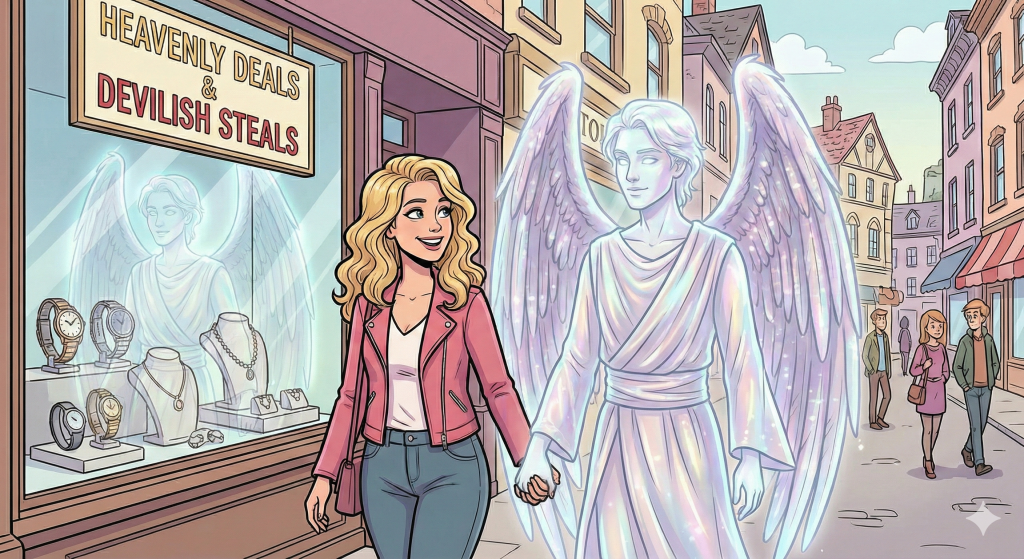
Do you realize we can’t procreate with chimpanzees or bonobos, and they are our closest living relatives evolutionarily? But somehow angel cum works?

I never learned this part of the lore when I was a Christian, so when I finally did, I thought I’d uncovered the debunk of the century. I thought if I could show Christians that this is what the Bible is referencing, they would finally see it’s all a silly myth.

They already knew about it.

And believed it.

Ugh.

120 Years

We get an update on the long life thing.

God shows his curmudgeonly side early on here. He can’t put up with people for as long as he has been. Yes, he might “so love” humanity, but he can’t stand to be around us for too long (this was before the invention of heaven and eternal life). This doesn’t scream “all-powerful”—not being able to withstand something. It also doesn’t seem “all-knowing”—creating something you can’t bear to let live longer.

This is also a bit of a defeater for the idea that death is solely a result of the Fall. I would mark this down as, at best, sloppy and confused writing, and at worst, a contradiction. Humanity is supposedly doomed to die because in Genesis 3 they were banished from the garden and could no longer access the magical Tree of Life. Adam and the rest lived for centuries after that, which would indicate that God created bodies to last that long. But then, he decided to limit the length of their lives out of some moody frustration.

If we look at reality, the average lifespan is around 80 years, which means God shaved off another 40 years from his 120-year cap. (The average was around 25–35 years around the time this book came out, though some people would live to be 50–60). If God is in control of how many years we live and not other mitigating factors, why is he constantly adjusting it, and why does it correlate with lifestyle?

God Knew He’d Regret

… it was always part of the plan!

Genesis 6:5–6 The Lord saw how great the wickedness of the human race had become on the earth… The Lord regretted that he had made human beings on the earth, and his heart was deeply troubled.

God was literally like, “Why did I do that? Why did I make people? They’re just making me sad.”

I didn’t see that one coming.

The idea that God is the god that classic theism theologians made up is consistently debunked as many times as there are cross-references in the Bible; here’s another one. God made people and then was bummed about it.

He is supposed to be outside of time and have perfect knowledge of everything NOW. Which means that while he was forming Adam from dirt, he was saying to himself, “I’m going to regret this! I’m making a huge mistake!”

That’s not reasonable, right? It makes more sense that the God they made up for this myth was simply not all-knowing.

Good Ole Noah

Noah is told to build a boat because God is going to kill almost everything. We know the story, or at least we think we do.

When I was a Christian, I was taught that Noah warned everyone of the coming waters, but it’s just not here in the text. Images of a drought, years of Noah building the boat, the people mocking and jeering at him as he warned them of the flood and invited them to join him: (verses not found).

In 2 Peter 2:5, Noah is described as a “preacher of righteousness,” but that doesn’t mean he warned the Nephilim that it was going to rain. Actually, in Matthew 24:37–39, Jesus makes a very bold statement which debunks this idea:

“As it was in the days of Noah, so it will be at the coming of the Son of Man. For in the days before the flood, people were eating and drinking, marrying and giving in marriage, up to the day Noah entered the ark; and they knew nothing about what would happen until the flood came and took them all away. That is how it will be at the coming of the Son of Man.”

The phrase “as it was in the days of Noah” is often meant to indicate debauchery, but it appears that the people were just innocently going about their business, doing normal life stuff. Notice the verse doesn’t say “eating humans and drinking angel spunk.” It’s just trying to say that Jesus will come back when no one expects him because—and here’s the clincher—no one expected the flood.

Noah didn’t warn anyone. Christians just say that to make God seem less monstrous and to promote an image of a merciful God who gives people adequate chances to repent before killing babies and kittens.

How Many Animals?

In verse 20 we read:

Two of every kind of bird, of every kind of animal and of every kind of creature that moves along the ground will come to you to be kept alive.

There are roughly 10,000 to 11,500 species of bird. Multiply that by 2 and the ark is an aviary of 20,000+ birds, including all the necessary food for a year. Of course, there would be no automation involved in caring for the birds, so a full-time staff of upwards of 10 people would be necessary just to maintain them.

And that’s just the birds.

Spoiler alert: the next chapter will have a contradiction in the number and say that it was 7 pairs of each bird. That’s 140,000 birds to care for.

This isn’t a true story. There are countless reasons why this wouldn’t work; this is just a simple one.

The Forecast

Next time, it’s gonna rain.

We’ll get deeper into the stupidity of this myth and ask why none of the women are named (even though we know the answer).

As always, there are different jokes and ideas in the video, so give that a gander!

Subscribe!


Preview and Intro “The Lord was like, ‘Why did I do that? Why did I make people? They’re just making me sad.’ I didn’t see that one coming.

Hey guys, welcome back to Joel Reads Bible. And that’s right, you guessed it, we’re into chapter 6. This is where things are getting pretty exciting because we’re going to be doing one of the big stories in Genesis. Let’s see what happens in Genesis chapter 6.”

Verse 1 “When men began to increase in number on the earth—it’s been going on for a while, every single man had more boys and stuff, like, they had a lot of kids. They mentioned the probably the firstborn, I would assume, and then but they said and they had a bunch of other ones. But so there are a lot. When the men began to increase in number on the earth and daughters were born to them,”

Verse 2 “the sons of God—who are they?—the sons of God saw that the daughters of men were beautiful, and they married any of them they chose.

Already there’s a lot of questions in chapter 6. The sons of God saw the daughters of men. It feels like they’re two different—it’s not like the sons of men, it’s the sons of God saw the daughters of men. So there’s a difference there. Are all sons sons of God? Like, are all men sons of God and all daughters just daughters of men? Like, is this just another way that women—that men rule over women because they’re sons of God and women are daughters of men? Or are these sons of God who are taking the—like, ‘Oh, these beautiful women, these beautiful human women are fantastic! Let’s bring them up to heaven where we are, we’re sons of God.’ Or are they faithful? We haven’t gotten into faithful yet, but I mean, what we learned was in chapter 4, at the time men began to call on the name of the Lord, so maybe they’re now considered sons of God. I don’t know, but anyway, I’m not going to belabor that.”

Verse 3 “And the Lord said, ‘My spirit will not contend with man forever, for he is mortal; his days will be 120 years.’

And why are you—what are you contending? What’s that word ‘contend’? Like, are you fighting with him? And his days—you know what? We’re not doing this 969-year thing anymore. His days are going to be 120. That’s it. Four score and 20 years. This is very—I think Lincoln stole from the Bible, and it’s inaccurate. It’s about 80.”

Verse 4 “The Nephilim were on the earth in those days—Nephilim. I don’t know if I should look at the Study Bible. Is that cheating? Because here it says that they were people of great size and strength, but that’s in Numbers. I’m not going to—I’m not going to read the Study Bible. I’m sorry for doing that. We’re going to assume that Nephilim means something, and maybe we’ll learn who they are. The Nephilim were on the earth in those days and also afterwards, when the sons of God went to the daughters of men and had children with them. They were the heroes of old, men of renown.

They were the heroes of old. To say that this is like Lord of the Rings is goofy. Lord of the Rings is like this, but Lord of the Rings is a fiction, and this feels like that too. They were the heroes of old, men of renown. You know, like they were the Knights of the Round Table.”

Verse 5 “The Lord saw how great man’s wickedness on the earth had become—again, who are the sons of God? What is the significance of them? And then all of a sudden, the Lord is seeing how great man’s wickedness on Earth had become—and that every inclination of the thoughts of his heart was only evil all the time.

This sounds like it might be exaggerating, but let’s take it at face value. Every inclination of the thoughts of his heart. Thoughts of his heart. Thoughts of his heart. Thoughts of his heart. Anyway, it’s poetry. It’s a poetic book. That part we can’t take literally.”

Verse 6 “The Lord was grieved that he had made man on the earth, and his heart was filled with pain.

The Lord was like, ‘Why did I do that? Why did I make people? They’re just making me sad.’ I didn’t see that one coming.”

Verse 7 “So the Lord said, ‘I will wipe mankind, whom I have created, from the face of the Earth—men and animals and creatures that move along the ground and birds of the air—for I am grieved and I have made them.’

‘For I am grieved and I have made them.’ This is like an excuse. It’s like he can do that. He can, guys! He can do—no, he can do—no, no, no, don’t. He can do that. He made them. Because I’ve heard that God can kill babies with cancer. God can give babies cancer and kill. He has the right. It’s fine.”

Verse 8 “But Noah found favor in the eyes of the Lord.

Surprisingly, the heroes of old, the men of renown, did not. I think this might be bad writing, honestly, because it’s just not that coherent. It’s like, ‘Who are these characters?’ Maybe we’ll find out, maybe it will be revealed. But these are all good questions. And by the way, if you know the answers, you can put them in the comments. Send me a verse in the Bible that says, ‘This is how this is what it is.’ But anyway, we’re going to get to it, so you don’t even really have to worry about it. But just comment on the video and like it.”

Verse 9 “This is the account of Noah. Noah was a righteous man, blameless among the people of his time, and he walked with God.

And I’m going to take that literally. He walked with God. Because we know that God goes for walks with the people he really, really likes and who really, really like him.”

Verse 10 “Noah had three sons—we know these guys—Shem, Ham and Japheth.”

Verse 11 “Now the Earth was corrupt in God’s sight and was full of violence.”

Verse 12 “God saw how corrupt the Earth had become, for all the people on Earth had corrupted their ways.”

Verse 13 “So God said to Noah, ‘I am going to put an end to all people, for the Earth is filled with violence because of them. I am surely going to destroy both them and the Earth.’

He’s going to actually destroy the Earth. I’m not sure if he’s going to destroy the Earth.”

Verse 14 “’So make yourself an ark of cypress wood; make rooms in it and coat it with pitch inside and out.’

That’s the best way to make it waterproof.”

Verse 15 “’This is how you are going to build it’—write this down, guys—’this is how you are going to build it: the ark is to be 450 feet long, perfect; 75 feet wide, yes; and 45 feet high.’”

Verse 16 “’Make a roof for it and finish the ark within 18 inches of the top. Put a door in the side of the ark and make lower, middle and upper decks.’”

Verse 17 “’I am going to bring floodwaters on the earth to destroy all life under the heavens, every creature that has breath of life in it. Everything on Earth will perish.’”

Verse 18 “’But I will establish my covenant with you, and you will enter the ark—you and your sons and your wife and your sons’ wives with you.’”

Verse 19 “’You are to bring into the ark two of all living creatures, male and female, to keep them alive with you. Two of every kind,’”

Verse 20 “’of bird, of every kind of animal and of every kind of creature that moves along the ground will come to you to be kept alive.’”

Verse 21 “’You are to take every kind of food’—whoa, that is to be eaten—’and stored away as food for you and them.’”

Verse 22 “Noah did everything just as God commanded him.

Great. Well, that’s a good start.”

Closing Thoughts “Noah—he’s a righteous man, but God is mad. It’s okay, he’s allowed to be mad because all the great heroes of old, the men of renown, have been just banging these human women and that made everyone violent. And they’re probably because they’re all inbred, by the way, like the—again, that’s what has happened. So, I don’t whose fault that was? Making two people and thinking that’s going to be fine? Come on!

But anyway, God didn’t see any of this coming. He was actually very grieved about it. ‘I’m just going to do a clean, you know, make wipe the blackboard, you know what I mean? Just like start over.’ And I can do that. And by the way, not morally wrong. There’s nothing wrong with this. He made them, guys! He made—don’t worry, I can kill everything, I made it!

So let’s see what happens in chapter 7. Does he actually do it? Would he actually do that? By the way, we know a lot of things about God from the first few chapters of the Bible. One thing that we learned from this chapter is that God gets upset about things not working out that he, it seems, didn’t know would go that way. Because you think if it would grieve him, he’d be like, ‘Well, let—I’ll do it a different way. I’m not going to make Eve quite as gullible or I’m not going to make Adam as aloof, standing right beside her when she’s eating the fruit’ type of thing.

We also know that he’s vengeful and that when human beings, or sons of God, whoever they are, do evil things and are violent, they’re going to be punished. Fine. I’m guessing they probably have babies; they’re going to be punished too. Already guilty. And all living things, every single living thing. God’s like, ‘I’m pissed.’ I don’t know. I feel like God is going to do the unthinkable and probably flood the whole world. But stay tuned, subscribe to find out, ring the bell, all the stuff, and we’ll see you next time for chapter 7. Blessed be unto you this day.”

Subscribe!

For weekly emails regarding new posts, videos and more!